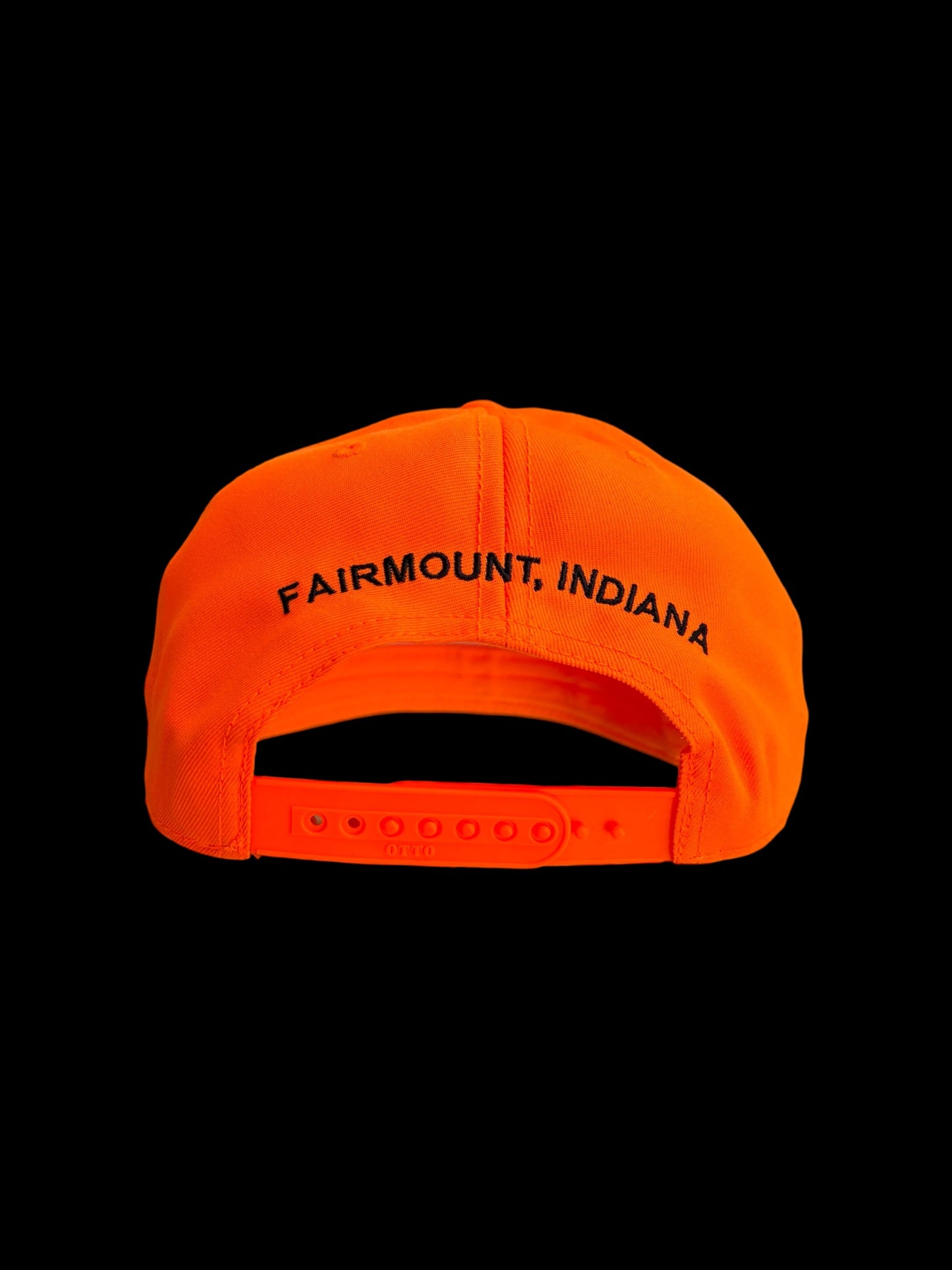


Jim Davis Death Cult Hat
Jim Davis Death Cult Hat
Couldn't load pickup availability
ORDERS OPEN: 7/16/26
ORDERS CLOSE: 7/20/26
TO PRINT: 7/20/26
PRINTED ON BLAZE ORANGE OTTO TRUCKER HATS.
ALL ITEMS TAKE BETWEEN 3-4 WEEKS TO PRODUCE AFTER THE ORDER PERIOD ENDS. You will always receive your item unless otherwise contacted. All items are final sale. We are not responsible for lost, stolen, or misplaced packages.
Fairmount, Indiana is a town of roughly 2,500 people that somehow produced two wildly different American icons: James Dean, the sullen face of postwar teenage rebellion, and Jim Davis, the cartoonist behind a lasagna-obsessed orange cat who has nothing whatsoever to say about rebellion. Dean grew up there with his aunt and uncle, Ortense and Marcus Winslow, after his mother's death sent him from California back to the family farm, and it was in Fairmount that he did his first acting in school plays before leaving for Hollywood and dying in a 1955 car crash at 24, an event that instantly calcified him into American mythology. Davis, born fourteen years later, grew up on his own small farm just outside town and went through the same high school — he even took speech class from Adeline Nall, the drama teacher who'd mentored Dean a decade and a half earlier, though the two never crossed paths themselves.
What makes the coincidence stick is how differently the town has metabolized each legacy. Dean's mythology is tragic and outsized. Fairmount hosts an annual "Museum Days" festival built around his memory, complete with a look-alike contest and pilgrims who treat his grave like a shrine, part of the same postmortem-idol machinery that turned Marilyn Monroe and Elvis into permanent cultural fixtures. Davis's legacy runs in a completely different register: cheerful, commercial, and thoroughly uncool by comparison, celebrated through a "Garfield Trail" of statues and a small museum devoted to comic-strip merchandise rather than doomed-genius iconography. Same zip code, same cornfields, two totally opposite theories of what makes someone famous forever - one built on an early, glamorous death, the other on forty-plus years of a cat complaining about Mondays.
It's genuinely one of those only-in-America trivia facts, the kind that sounds invented until you check it: a town that shaped both the template for the tragic young rebel and the least edgy, most merchandised comic strip character of the 20th century. There's no hidden meaning in it, no thread connecting the two beyond geography and a shared teacher, but it's a good reminder that small Midwestern towns have a strange habit of producing cultural touchstones in wildly mismatched pairs, and that Fairmount, Indiana got an oddly lopsided draw of the two.